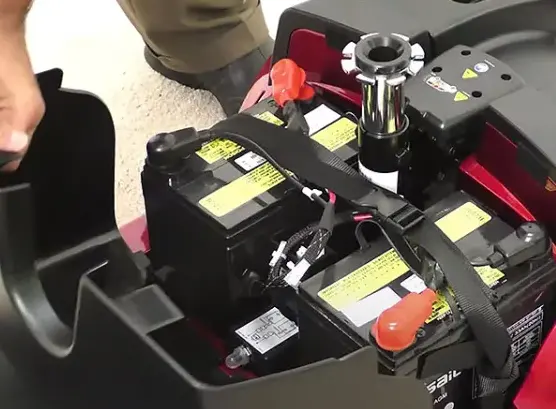
The best batteries for mobility scooters are usually deep-cycle AGM or gel batteries for simple replacement, while lithium batteries are often the better choice when you need lower weight, longer cycle life, faster charging, and more usable energy. The right option depends on the scooter’s voltage, battery compartment, charger, daily distance, user weight, terrain, and budget.
For most mobility scooters, the battery is not just an accessory. It directly affects travel range, acceleration, reliability, charging time, operating cost, and overall safety. Choosing the correct batteries for mobility scooters requires more than comparing amp-hour numbers.
Most mobility scooters use one of three battery technologies:
Sealed lead-acid AGM batteries
Gel lead-acid batteries
Lithium-ion batteries, including lithium iron phosphate batteries
Each type has different advantages. The best battery depends on whether the scooter is used occasionally, every day, indoors, outdoors, on hills, or for long-distance travel.
AGM Batteries
AGM stands for Absorbent Glass Mat. AGM batteries are sealed lead-acid batteries designed to operate without regular water maintenance.
AGM batteries are popular for mobility scooters because they are:
Widely available
Relatively affordable
Easy to replace
Compatible with many standard mobility scooters
Resistant to moderate vibration
Suitable for regular short- and medium-distance use
The main limitation is weight. An AGM battery can be much heavier than a lithium battery with a similar nominal capacity. AGM batteries may also require longer charging times and can lose service life if they are repeatedly deeply discharged or left in a low-charge condition.
Gel Batteries
Gel batteries use a silica-based gel electrolyte instead of a liquid electrolyte. They are also sealed and maintenance-free.
Gel batteries can be a good choice for mobility scooters because they offer:
Good resistance to vibration
Low maintenance
Stable performance
Reduced risk of electrolyte leakage
Suitable performance in many indoor and outdoor applications
However, gel batteries require the correct charging profile. Using an unsuitable charger can cause overcharging, reduced capacity, or premature battery failure.
Lithium Batteries
Lithium batteries are increasingly used in mobility scooters because they provide more energy with less weight.
Compared with conventional lead-acid batteries, lithium batteries may offer:
Lower overall weight
Longer cycle life
More consistent voltage during discharge
Faster charging
Better energy efficiency
Easier handling and installation
More usable capacity in some operating conditions
Lithium batteries usually cost more initially. They also require a battery management system, commonly called a BMS, to monitor voltage, current, temperature, charging, and discharging conditions.
For users who transport their scooter frequently, travel long distances, or use the scooter every day, the weight and cycle-life advantages of lithium batteries can justify the higher initial cost.
Are Lithium Batteries Better Than AGM Batteries for Mobility Scooters?
Lithium batteries are not automatically better for every mobility scooter. They are usually better when weight, daily use, charging efficiency, and long-term operating cost are important. AGM batteries may be more practical when the scooter manufacturer specifies lead-acid batteries, the budget is limited, or the scooter is used only occasionally.
Factor
AGM Battery
Lithium Battery
Initial price
Usually lower
Usually higher
Weight
Heavy
Much lighter
Cycle life
Moderate
Usually longer
Charging efficiency
Lower
Higher
Maintenance
Low
Low, with BMS protection
Replacement availability
Very common
Depends on supplier and model
Best use
Standard replacement and occasional use
Frequent use, long range, portable scooters
The most important rule is compatibility. A lithium battery should not be installed simply because it has the same voltage printed on the label. The battery compartment, charger, connector, BMS communication, current rating, and scooter controller must all be suitable.
How Do I Choose the Correct Voltage?
Mobility scooters commonly use 12V, 24V, 36V, or higher battery systems, depending on the scooter design.
Many compact mobility scooters use two 12V batteries connected in series to create a 24V system. Larger models may use a higher-voltage battery pack or a different configuration.
Before purchasing batteries for mobility scooters, confirm:
The scooter’s nominal system voltage
The number of batteries used
Whether the batteries are connected in series or parallel
The original battery specifications
The charger output voltage
The connector and cable configuration
The manufacturer’s replacement requirements
Never guess the voltage based only on the battery’s physical size. A battery with the wrong voltage can prevent the scooter from operating correctly and may damage the charger or controller.
How Much Battery Capacity Do You Need?
Battery capacity is commonly expressed in amp-hours, or Ah. A higher Ah rating generally means more stored energy, but it does not guarantee a specific travel distance.
Actual range depends on:
Battery voltage
Battery capacity
Rider weight
Terrain and slope
Tire pressure
Outdoor temperature
Driving speed
Stop-and-start frequency
Motor efficiency
Battery age
Scooter condition
A useful way to compare battery energy is to calculate watt-hours:
Watt-hours = Voltage × Amp-hours
For example, a 24V battery system with 50Ah has a nominal energy rating of approximately 1,200Wh. In real use, the available energy will be affected by discharge conditions, temperature, battery chemistry, and the scooter’s electrical efficiency.
It is also important to avoid selecting a battery solely because it has the highest Ah rating. A larger battery may not fit the compartment, may exceed the scooter’s permitted weight, or may not work correctly with the existing charger.
What Is the Difference Between Nominal Capacity and Usable Capacity?
Nominal capacity is the rated energy under specified test conditions. Usable capacity is the amount of energy that can be safely used during normal operation.
Lead-acid batteries often provide less practical capacity when discharged quickly or under heavy loads. Lithium batteries can sometimes deliver a greater proportion of their rated capacity while maintaining a more stable voltage.
This is why two batteries with the same voltage and Ah rating may not provide the same real-world range.
For a mobility scooter user, the more useful questions are:
How far can the scooter travel under my normal conditions?
How does the battery perform on slopes?
How many charging cycles can it provide?
How much capacity remains after one year of use?
Can the battery support the motor’s peak current?
Why Is the Battery Management System Important?
A battery management system is particularly important for lithium batteries.
A BMS can help monitor and control:
Cell voltage
Pack voltage
Charging current
Discharge current
Cell temperature
Overcharge protection
Over-discharge protection
Short-circuit protection
Cell balancing
The BMS should be matched to the battery chemistry, voltage, capacity, and expected current. A battery pack with an unsuitable BMS may appear to work initially but fail under acceleration, climbing, cold conditions, or low state of charge.
When evaluating batteries for mobility scooters, ask whether the supplier can provide technical information about the BMS, charger compatibility, protection functions, and operating temperature range.
Does a Mobility Scooter Need a Deep-Cycle Battery?
Yes. Most mobility scooters require a deep-cycle battery rather than a standard automotive starter battery.
A starter battery is designed to deliver a large amount of current for a short period, such as starting an engine. A mobility scooter battery must provide steady power over a longer period and tolerate repeated charging and discharging.
Deep-cycle batteries are designed for this type of operation. AGM, gel, and many lithium battery packs can be configured for deep-cycle mobility applications when correctly specified.
Using an automotive starting battery may result in poor range, short service life, and unreliable performance.
What Battery Is Best for a Portable Mobility Scooter?
For a portable or foldable mobility scooter, weight is often one of the most important considerations. A lithium battery may be preferable because it reduces the weight of the removable battery pack and makes transportation easier.
However, a portable scooter may have strict limits on:
Battery dimensions
Pack weight
Connector type
Maximum current
Charging method
Airline or transport requirements
Before changing from AGM to lithium, confirm that the scooter manufacturer or a qualified battery supplier supports the conversion.
What Battery Is Best for Long-Distance Mobility Scooter Use?
For long-distance use, look for a battery with:
Sufficient voltage
Appropriate Ah capacity
Strong cycle-life performance
Stable discharge characteristics
Correct peak-current capability
A reliable BMS if using lithium chemistry
A compatible high-quality charger
A higher-capacity battery may improve range, but the scooter’s motor, controller, wiring, and battery compartment must be able to support it.
In some cases, improving tire pressure, reducing unnecessary load, checking wheel alignment, and replacing worn components can increase range more effectively than simply installing a larger battery.
How Long Do Mobility Scooter Batteries Last?
Battery life depends on chemistry, depth of discharge, charging habits, temperature, storage, and usage frequency.
AGM and gel batteries may require replacement after several years, but heavy daily use or poor charging practices can shorten their life. Lithium batteries generally support more charge cycles, although actual performance depends on cell quality, BMS design, thermal management, and operating conditions.
Warning signs of battery deterioration include:
Reduced travel range
Slower acceleration
Voltage dropping quickly under load
Longer charging time
Battery swelling or physical damage
The charger finishing unusually quickly
The scooter stopping on hills
Uneven performance between trips
A battery should be inspected or tested when these symptoms appear. Continuing to use a damaged battery can create safety risks.
How Can You Make Mobility Scooter Batteries Last Longer?
To extend battery life:
Use the charger recommended for the battery chemistry.
Avoid regularly discharging the battery until the scooter stops.
Recharge the battery after normal use.
Do not store the battery fully discharged.
Keep the battery away from extreme heat and freezing temperatures.
Check connectors and cables for corrosion or looseness.
Maintain correct tire pressure.
Avoid unnecessary loads.
Do not use a damaged, swollen, or leaking battery.
Follow the supplier’s storage and charging instructions.
For lithium batteries, avoid using chargers designed only for lead-acid batteries unless the supplier confirms compatibility.
What Should You Ask a Battery Supplier?
A professional battery supplier should be able to confirm:
Battery chemistry
Nominal voltage
Rated capacity
Operating voltage range
Maximum continuous discharge current
Peak discharge current
Recommended charging voltage
Recommended charging current
Battery dimensions and weight
Connector type
BMS protection functions
Operating temperature range
Cycle-life testing conditions
Warranty and after-sales support
OEM or customized battery options
This information is especially important for mobility scooter manufacturers, distributors, repair companies, and fleet operators who need consistent battery performance across multiple vehicle models.
Can Power-Gogo Supply Batteries for Mobility Scooters?
Power-Gogo can be considered when you need a battery supplier for electric mobility applications, custom battery packs, or OEM/ODM cooperation. The correct solution should be selected according to the scooter’s voltage, capacity, available installation space, connector, charging system, and controller requirements.
If you are sourcing batteries for mobility scooters in bulk or need a customized battery solution, contact Power-Gogo with the following information:
Mobility scooter model
Required voltage
Existing battery capacity
Battery dimensions
Connector photographs
Charger specifications
Expected travel range
Daily operating conditions
Required order quantity
Providing these details helps the supplier evaluate compatibility instead of recommending a battery based only on a general product name.
Final Answer: Which Batteries Are Best for a Mobility Scooter?
For most standard mobility scooters, AGM or gel deep-cycle batteries are practical, widely compatible, and cost-effective. For users who need lower weight, frequent daily operation, longer cycle life, faster charging, or easier transportation, a properly designed lithium battery may be the better choice.
The best batteries for mobility scooters are not necessarily the largest or most expensive ones. They are the batteries that match the scooter’s voltage, capacity, charger, current demand, physical dimensions, battery management system, and real operating conditions.
Always confirm compatibility before replacing the battery, especially when changing from lead-acid to lithium technology.
We use cookies to ensure that we give you the best experience on our website. If you continue to use this site we will assume that you are happy with it.