How A Battery Swap Station Unlocks the True Potential of Your EV Fleet
Sep-29-2025
Share:
With over 14 years deep in the trenches of lithium battery manufacturing here at Power GoGo, I’ve seen the evolution of the electric vehicle firsthand. For business owners like Mark Davis in the USA, who manage large urban e-scooter fleets or last-mile delivery services, the promise of a clean, efficient EV fleet often hits a major roadblock: charging. The long hours of downtime, the high labor costs of manual battery management, and the very real safety concerns of charging hundreds of batteries are significant pain points. This article is for you. We will explore how moving beyond the plug to a comprehensive electric vehicle battery swapping ecosystem is not just an alternative, but a revolutionary leap forward. We’ll break down how this technology solves your biggest operational headaches, boosts your ROI, and truly future-proofs your business in the competitive world of urban mobility.
What is an EV Battery Swapping Ecosystem and How Does It Work?
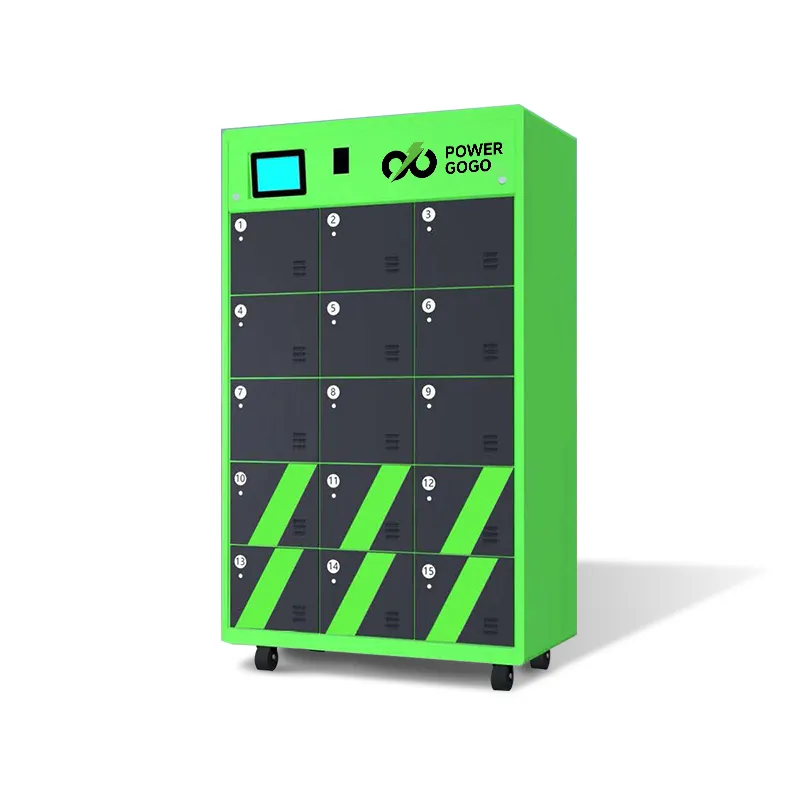
Many people hear "battery swap station" and picture a simple vending machine for batteries. But that’s only one piece of a much larger, more intelligent puzzle. A true swapping ecosystem is an integrated, turn-key solution designed to eliminate charging downtime entirely. It’s a holistic system comprising four key elements: the high-performance swappable batteries, the smart swap station cabinets that charge and manage them, the electric vehicles (EVs) designed for quick replacement, and the cloud-based software platform (Battery as a Service or BaaS) that oversees the entire operation. This approach redefines the entire energy replenishment process for an electric vehicle.
Imagine one of your delivery riders pulling up to a cabinet. The app on their phone identifies them, unlocks a slot with a fully charged battery, and opens the slot containing their depleted one. The rider swaps the batteries in under three minutes—less time than it takes to fill a gas tank—and is immediately back on the road. Meanwhile, the depleted battery pack is now securely inside the charging station, where it begins a safe, optimized charging cycle, its health and status monitored in real-time by our central platform. This is the essence of the battery swapping mode: turning the lengthy, passive process of EV charging into a quick, active transaction. It transforms the electric vehicle from a liability that needs hours of downtime into a constantly productive asset.
This is fundamentally different from traditional charging methods. With conventional EVs, each vehicle is tethered to a cable for hours, rendering it useless. For a commercial fleet, this means you either need a significantly larger number of vehicles to maintain service levels, or you accept massive periods of unproductivity. The charging and battery swapping models address the same need—powering an electric vehicle—but from opposite ends of the efficiency spectrum. One is about waiting for energy; the other is about instantly acquiring it. It’s a paradigm shift that turns the biggest weakness of an EV into its greatest strength.
How Can a Swap Station Accelerate EV Adoption for Commercial Fleets?
For a business, the decision to transition to an electric vehicle fleet hinges on operational efficiency and return on investment. This is where the adoption of electric vehicles often stalls. The challenge isn’t the EV itself, but the charging infrastructure that supports it. A swap station directly tackles this barrier and can dramatically accelerate the adoption of this sustainable technology for any commercial fleet. The primary benefit is the near-total elimination of vehicle downtime. A typical EV scooter might take 4-6 hours to charge. A swap takes less than three minutes.
Let’s put that into perspective. A delivery fleet that relies on traditional EV charging effectively loses each vehicle for a third of a 24-hour cycle. To compensate, a fleet manager like Mark has to purchase 30-40% more vehicles to ensure continuous operation, a massive capital expenditure. With a battery swap station, vehicles can run nearly 24/7, with brief stops for swaps. This means you can accomplish the same amount of work with a smaller, more efficient fleet. This radical improvement in asset utilization is the single most compelling reason for the widespread adoption of swapping technology in the logistics and delivery sectors. It directly translates to lower upfront costs and higher daily revenue per vehicle.
Furthermore, this model eradicates "range anxiety," a major concern for both riders and operators. Instead of worrying about finding a charging station and waiting, riders can confidently operate knowing a network of swapping stations strategically located throughout their service area provides instant power. This operational confidence ensures that deliveries are not delayed and service-level agreements are met. The transition to electric becomes seamless, removing the refueling challenges in electric mobility and making the operational flow even smoother than with traditional internal combustion engine vehicles. The adoption of battery swapping isn’t just a convenience; it’s a powerful business strategy.
Are Battery Swapping Stations a Safer Alternative to a Traditional Charging Station?
Safety is non-negotiable, especially when managing a large fleet of lithium batteries. One of the most significant pain points for fleet operators is the inherent risk of setting up an ad-hoc electric vehicle charging station in a warehouse. Charging dozens or even hundreds of batteries in an open, often unsupervised environment creates a substantial fire hazard. A professional battery swap station is engineered from the ground up to mitigate these risks, making it an inherently safer alternative to traditional charging methods.
Each battery slot in a Power GoGo swap station cabinet is an individual, controlled environment. The system continuously monitors the temperature, voltage, and current of every battery pack. If any anomaly is detected, the cabinet can immediately cut power to that specific slot, preventing a potential thermal event from escalating. Our cabinets are equipped with advanced fire suppression systems, providing a level of protection that is simply not feasible in a typical warehouse charging setup. The construction and operation of battery cabinets are governed by strict safety protocols. This centralized and automated approach to battery management removes the element of human error and provides operators with peace of mind.
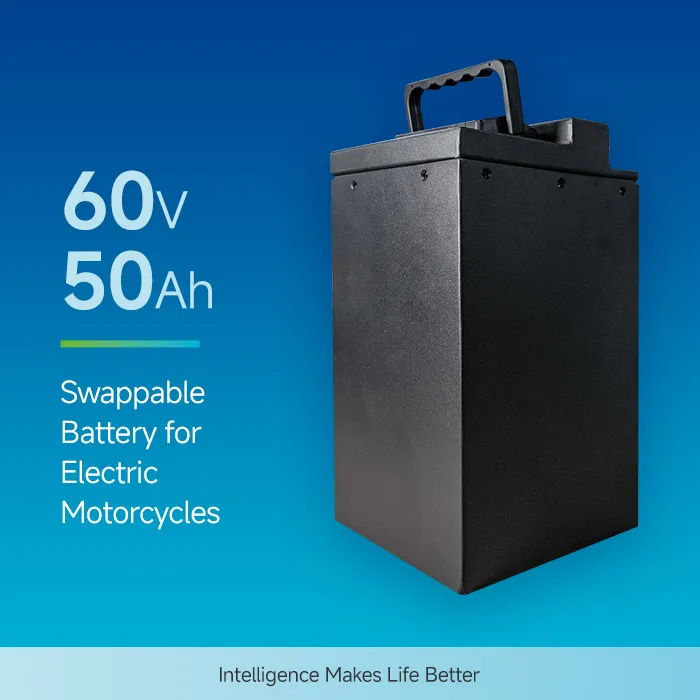
Moreover, the batteries themselves are designed for safety and durability. Our swappable batteries feature an IP67-rated waterproof and dustproof casing, protecting the internal components from the harsh realities of daily commercial use. Inside, an intelligent Battery Management System (BMS) acts as the battery’s brain, balancing the cells during charging and discharging, and protecting against over-voltage, under-voltage, short circuits, and extreme temperatures. This multi-layered safety approach, from the individual cell to the cloud management platform, makes a swapping ecosystem a far more secure and reliable solution for powering a modern electric vehicle fleet.
Why is a Centralized Swapping Infrastructure Crucial for a Sustainable EV Fleet?
When we talk about building a truly sustainableEV fleet, the conversation must extend beyond tailpipe emissions. It has to include the efficiency of the supporting EV infrastructure. A centralized swapping infrastructure offers profound benefits for urban planning and grid management compared to a decentralized network of individual EV charging points. In a dense urban environment, space is at a premium. A single battery swapping station can service hundreds of vehicles per day within a very small footprint. To achieve the same service level with traditional charging, a business would need a vast area dedicated to parking and charging dozens of EVs simultaneously.
This efficiency has a direct impact on the electrical grid. Imagine a scenario where a large delivery fleet of 100 vehicles all return to base at 6 PM and plug in to fast charging points. This creates a massive, sudden spike in local energy demand. A swapping infrastructure avoids this problem entirely. The batteries within the swap station cabinets are charged slowly and intelligently throughout the day and night. The system’s software can be programmed to draw power during off-peak hours when electricity is cheaper and the grid is under less strain. This managed charging process is not only better for the grid but also significantly better for the health and longevity of the batteries.
Furthermore, this centralized model perfectly complements the integration of renewable energy. A business can install solar panels on the roof of their facility to power the charging and battery swapping stations. Because the charging is controlled and spread out over 24 hours, it can be aligned with periods of renewable energy generation, creating a truly green and sustainable operational cycle. This level of intelligent energy management is a key differentiator that makes the battery swapping for electric vehicles model a cornerstone of future smart city development.
What Role Does Standardization Play in the Growing Market for Battery Swapping?
One of the biggest questions I hear from prospective partners concerns standardization. In the broader electric vehicle market, particularly for passenger cars, the lack of a universal battery design has been a significant hurdle for the widespread adoption of battery swapping. Different manufacturers use different battery sizes, shapes, and communication protocols, making interoperability a massive challenge. However, this is precisely where the opportunity lies for private and commercial vehicles, especially in a closed-loop ecosystem.
For a fleet operator like Mark, the key is not industry-wide standardization, but fleet-widestandardization. By sourcing the entire solution—batteries, cabinets, and vehicles—from a single-source supplier like Power GoGo, you create a perfectly harmonized and efficient system. There are no compatibility issues. Every battery works with every scooter and every swap station in your network. This closed-loop approach de-risks the investment and guarantees seamless operation from day one. The standardization of battery design within your own fleet is what unlocks the powerful network effect of the swapping service.
While the industry moves toward broader standards, which will eventually allow for public swapping networks similar to today’s gas stations, the immediate value for businesses is in creating their own private infrastructure. This approach allows for rapid deployment and immediate realization of efficiency gains. As a manufacturer, we play a crucial role in this by providing a complete, vertically integrated solution. The advancements in battery design are making packs more energy-dense and modular, which will aid future standardization efforts. But for businesses today, the path to success is a dedicated swapping ecosystem tailored to their specific operational needs.
How Does a BaaS Model Revolutionize Fleet Management and the EV Ecosystem?
The "Battery as a Service" (BaaS) model is the revolutionary financial and operational engine that powers the entire swapping ecosystem. It fundamentally changes the economics of running an electric vehicle fleet. Traditionally, the battery is the single most expensive component of an EV, often accounting for 40-50% of its total cost. BaaS decouples the battery ownership from the vehicle ownership, drastically lowering the upfront acquisition cost of each EV. Instead of buying the battery, fleet operators essentially subscribe to a service that guarantees access to a fully charged battery whenever they need one.
This model shifts the financial burden from a large, upfront capital expenditure (CapEx) to a predictable, ongoing operational expenditure (OpEx). This is a game-changer for scalability. A company can expand its fleet more rapidly without the prohibitive cost of purchasing a battery for every new vehicle. The subscription fee covers not just the energy used, but also the maintenance, health monitoring, and eventual battery replacement and battery recycling. This eliminates the risk and uncertainty associated with battery degradation, a major concern in the total cost of ownership calculations for an EVfleet.
The technological heart of BaaS is the 24/7 cloud-based IoT platform. From my desk, I can help our clients monitor the real-time status of every single battery in their network—its location, state of charge, temperature, and overall health. This data is invaluable for logistics and fleet management. You can track assets, predict maintenance needs, and optimize the distribution of batteries across your battery swapping network. This level of insight and control, a core part of our one-stop battery swapping solution, addresses a major pain point for operators who, prior to battery swapping, were essentially flying blind when it came to understanding the health and usage of their most critical assets.
Can a Battery Swap Station Outperform a Fast EV Charging Station?
The terms "fast" and "efficient" are often used interchangeably, but in the context of EV infrastructure, they mean very different things. While a DC fast charging station can recharge a vehicle more quickly than a standard AC charger, it still cannot compete with the operational efficiency of a battery swap station. The difference is measured in minutes versus seconds. A swap is an instantaneous energy transfer. Fast charging is simply a less-slow version of traditional charging.
Let’s compare them across key operational metrics for a commercial fleet:
Feature
Battery Swap Station
DC Fast Charging Station
Replenishment Time
< 3 Minutes
30 – 60+ Minutes
Vehicle Uptime
~98% (Near Continuous)
~75% (Significant Downtime)
Grid Impact
Low (Slow, managed charging)
High (Massive power spikes)
Space Efficiency
High (Serves many vehicles/hour)
Low (1 vehicle per charger at a time)
Battery Longevity
High (Optimized slow charging)
Lower (Heat from fast charging degrades cells)
As you can see, for almost every metric that matters to a fleet operator, the swap station wins. The most critical, and often overlooked, factor is battery longevity. The high heat generated during repeated DC fast charging accelerates the degradation of lithium-ion battery cells. In contrast, the batteries in a swapping infrastructure are charged under ideal, temperature-controlled conditions at a slower, healthier rate. Our automotive-grade cells are rated for up to 6,000 cycles under these conditions, ensuring a long and reliable service life. This drastically reduces the long-term cost of battery replacement and improves the overall ROI of the entire EV ecosystem.
What are the Key Components of a Successful EV Swapping Infrastructure?
Building a robust and reliable swapping infrastructure requires more than just placing a cabinet on a street corner. It’s about ensuring every component is engineered to work in perfect harmony. From my experience at Power GoGo, a successful swapping ecosystem is built on four pillars:
The Battery: This is the lifeblood of the system. It’s not just about capacity; it’s about durability, safety, and intelligence. We utilize automotive-grade cells capable of thousands of charge cycles. Each 73.6V 40Ah Swappable Battery is equipped with a smart BMS that communicates constantly with the cabinet and the cloud, providing a rich stream of data for advancements in battery management.
The Cabinet: The swap station cabinet is the command center. It must be more than a simple locker. Our 12 Slolts Battery Swapping Cabinet is a sophisticated piece of technology, featuring dynamic load balancing to protect the grid, climate control to ensure optimal charging temperatures, and advanced safety features. It’s built to withstand the elements and the rigors of high-frequency commercial use.
The Vehicle: The electric vehicle itself must be designed for swapping. The battery compartment needs to be easily accessible, and the connection system must be robust and foolproof for riders. We offer a range of vehicles, like our popular EV-MY Scooter, that are co-developed with our battery system to ensure a seamless, sub-three-minute swap every time.
The Platform: The BaaS software platform is the invisible thread that ties everything together. It handles user authentication, payment processing, battery health monitoring, and provides fleet managers with a powerful dashboard for analytics and operational oversight. This is what transforms a collection of hardware into a smart, manageable EV charging infrastructure.
When these four components are developed and integrated by a single provider, the result is a turn-key solution that is reliable, scalable, and easy to deploy.
How Do We Overcome Challenges to the Widespread Adoption of Battery Swapping?
No transformative technology is without its challenges, and it’s important to address them head-on. The two primary concerns that potential partners raise are the initial investment required for the swapping infrastructure and the issue of standardization. While these are valid points, they are far from insurmountable, especially for commercial fleets.
The initial capital outlay for cabinets and a float of batteries can seem significant. However, this perspective often fails to account for the total cost of ownership (TCO). As we’ve discussed, the operational savings are immense: reduced labor costs from eliminating manual charging, lower capital expenditure on vehicles due to higher utilization, and longer battery life. When you perform a proper TCO analysis, the ROI on a battery swapping ecosystem is often realized much faster than with a traditional EV charging setup. The BaaS model further mitigates this by lowering the upfront cost of the vehicles themselves.
The standardization challenge, while real for the public passenger car market, is largely irrelevant for a private commercial fleet. By partnering with a one-stop solution provider, you are creating your own standard. Your batteries work in your vehicles and your stations. This closed-loop system is a strength, not a weakness, as it guarantees reliability and performance. As a supplier with a global footprint in markets from Spain to Indonesia, we’ve seen this model succeed time and again. The key is to view the technology for electric vehicle replenishment not as a product, but as a partnership with a provider who understands your unique operational needs.
What Does the Future Hold for the EV Ecosystem and Swapping Technology?
The future of urban mobility and logistics is undeniably electric, and battery swapping technology is poised to be a critical enabler of this transition. The battery swapping market is projected to grow exponentially in the coming years, driven by the relentless demand for efficient, sustainable solutions in the commercial sector. We are moving away from the simple question of charging or swapping and toward a more integrated EV ecosystem where multiple energy replenishment methods coexist, with swapping being the prime choice for high-utilization commercial applications.
We will see significant advancements in battery technology, leading to packs that are more energy-dense, lighter, and faster to charge even under controlled conditions. The software platforms will become even more sophisticated, using AI and machine learning to predict demand, optimize battery distribution across the swapping network, and perform predictive maintenance, further increasing system uptime. The scalability of battery swapping will improve as cabinet designs become more modular, allowing operators to expand their stations and battery swapping stations easily as their fleets grow.
Ultimately, the goal is to create a seamless, efficient, and sustainable flow of energy for our cities. The impact of battery swapping will be profound, not just in reducing operational costs for businesses, but in creating quieter, cleaner urban environments for everyone. It is a technology that solves the most pressing problems of EV fleet management today and lays the foundation for the smart, connected, and electric cities of tomorrow. As someone who has dedicated their career to this field, I am incredibly optimistic about the road ahead.
Key Takeaways
Efficiency is King: A battery swap takes minutes, not hours, dramatically increasing vehicle uptime and fleet productivity compared to any charging station.
Safety First: Centralized, controlled charging inside a smart swap station is inherently safer than ad-hoc warehouse charging setups.
Lower Total Cost of Ownership: The BaaS model reduces upfront vehicle costs, and operational savings on labor and battery longevity lead to a rapid ROI.
An Ecosystem, Not a Product: A successful deployment requires an integrated solution of batteries, cabinets, vehicles, and a cloud management platform from a single, reliable partner.
The Future is Swappable: For commercial fleets in logistics, delivery, and urban mobility, electric vehicle battery swapping is the most practical and scalable path to a fully electric, highly efficient future.