The electric motorcycle market is surging, but a single, persistent hurdle slows its momentum: the battery. Long charging times and range anxiety are significant concerns for both individual riders and, more critically, commercial fleet operators. As an operations director, you know that a vehicle sitting at a charger is a vehicle not generating revenue. This is where the revolution is happening. The future of electric two-wheelers isn’t just about a better motor; it’s about a smarter, faster way to power them. This article will explore why swappable battery technology is the ultimate game-changer for electric motorcycle manufacturers and fleet managers worldwide. We’ll dive deep into how this solution tackles the industry’s biggest pain points, unlocks new business models, and why choosing the right partner is crucial for success.
Why Are Traditional Electric Motorcycle Batteries Holding Fleets Back?
For businesses that rely on a fleet of electric two-wheelers, the conventional “plug-in” charging model presents a logistical nightmare. Imagine you’re Mark Davis, running a last-mile delivery service in a bustling city. Your primary goal is to maximize the number of deliveries per day. However, a standard battery in an electric motorcycle can take several hours to charge. This creates significant vehicle downtime, forcing you to either invest in a much larger, more expensive fleet to compensate or suffer lost revenue. The inefficiency is staggering. You face high labor costs for staff dedicated to managing the charging process, and the physical space required for a large-scale charging station can be a major expense in urban areas.
This operational drag is compounded by the persistent issue of range anxiety. A rider can’t afford to have their battery die mid-delivery. This forces conservative usage patterns, often resulting in vehicles returning to base with significant charge remaining, simply to avoid risk. This underutilization of the battery capacity further hurts your bottom line. Moreover, managing the health of dozens or hundreds of individual batteries becomes a complex task. Without a centralized system, it’s nearly impossible to track degradation, predict failures, and ensure every electric motorcycle in your fleet has a reliable power source. These are the core pain points that traditional battery technology simply cannot solve for commercial operations.
What Exactly is a Battery Swap Solution for an Electric Motorcycle?
A battery swapping solution elegantly sidesteps the entire problem of charging times. Instead of plugging the electric motorcycle into a wall, the rider simply pulls up to a battery swapping cabinet, removes the depleted battery, and swaps it for a fully charged one. The entire process takes less than a minute. Think of it like refueling a gasoline vehicle—it’s that fast and simple. This isn’t just a concept; it’s a proven, robust ecosystem that we at Power GoGo have perfected over 14 years in the lithium battery industry.
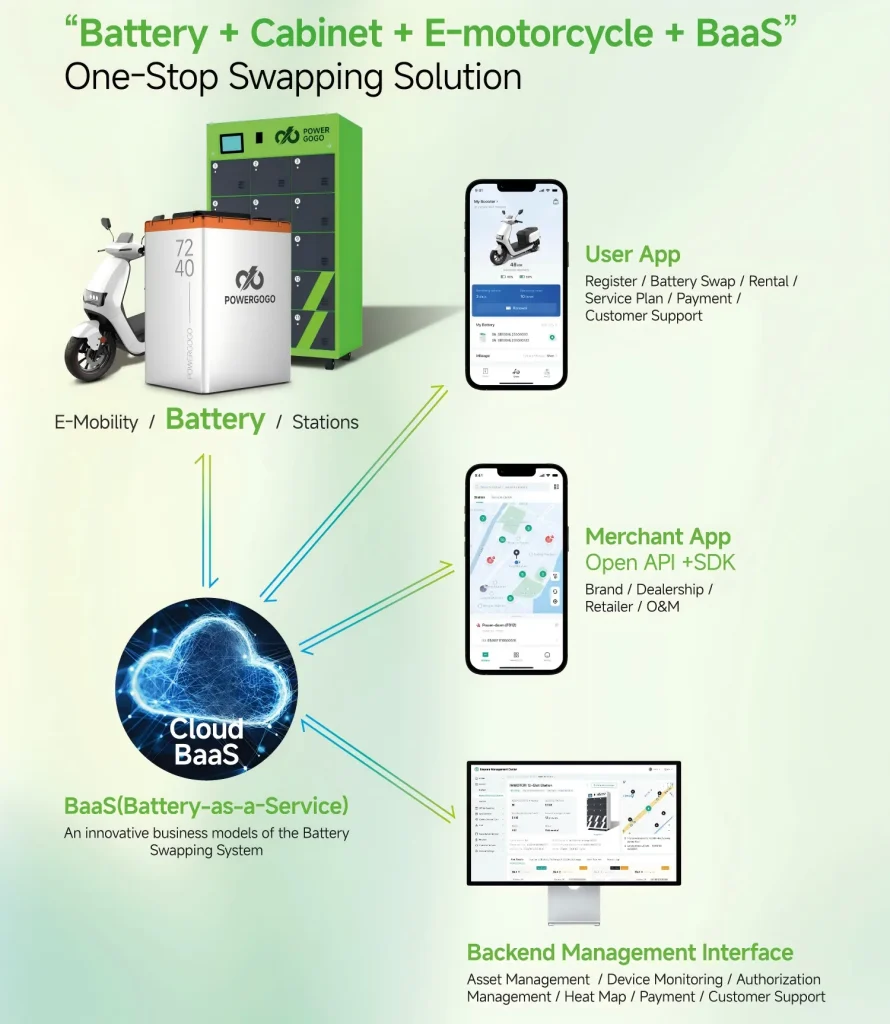
The system consists of three core components working in harmony:
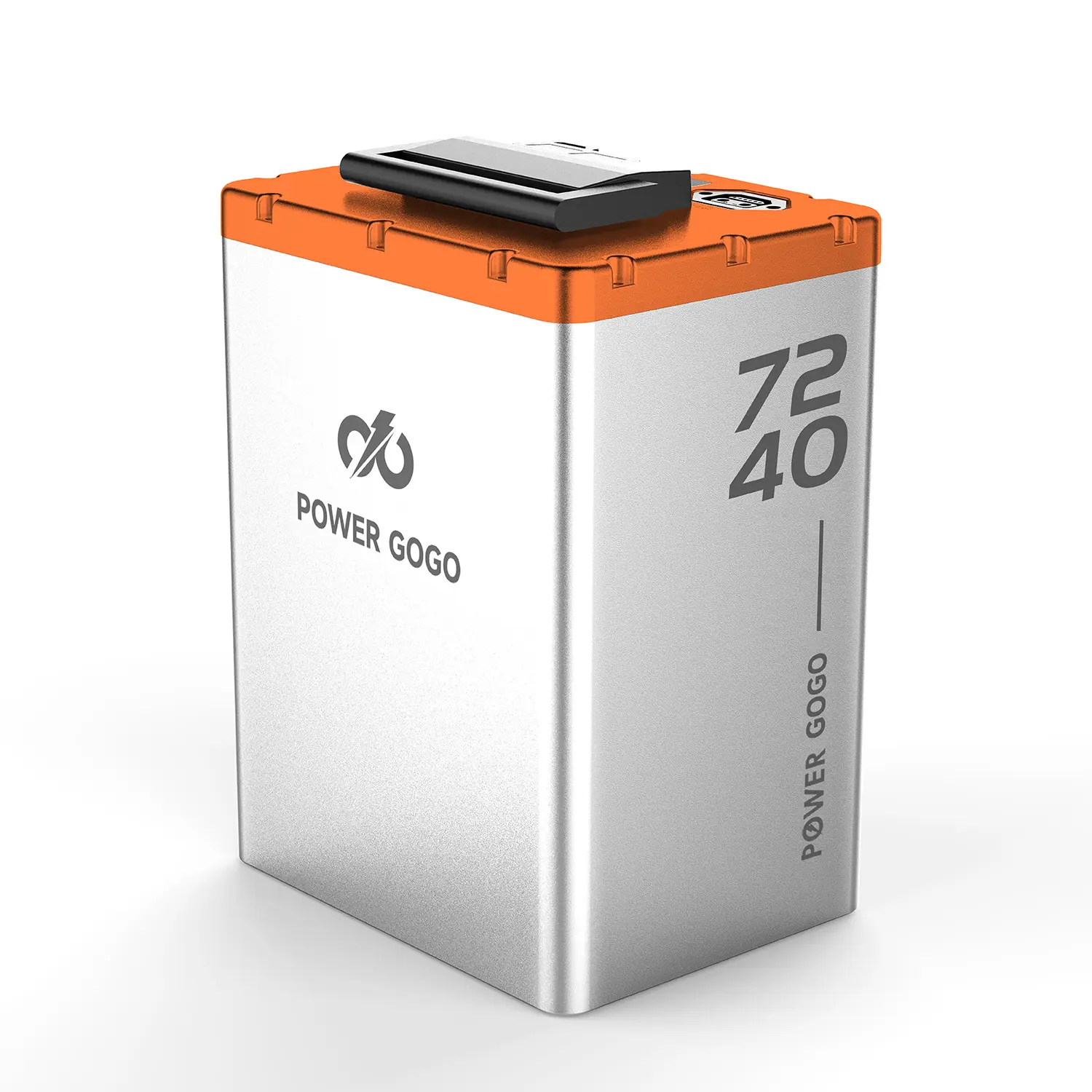
- The Swappable Battery: A standardized, durable, and smart lithium battery pack designed for frequent and rapid exchange. These batteries are engineered for thousands of cycles and packed with safety features.
- The Battery Swapping Cabinet: These are the hubs of the network. They securely store, charge, and monitor the batteries. Each slot in the cabinet functions as an intelligent charger that optimizes the battery life of each unit, ensuring they are always ready for deployment.
- The Cloud-Based Platform (BaaS): This is the brain of the operation. A sophisticated IoT network connects every battery and cabinet, allowing fleet managers to monitor battery health, track usage, manage inventory, and process payments, all from a single dashboard.
How Does Swappable Battery Technology Drive Unprecedented Fleet Efficiency?
For a fleet manager like Mark, the impact of a battery swap system is immediate and transformative. The most significant benefit is the near-elimination of vehicle downtime. A rider can swap a battery in 60 seconds and be back on the road, turning hours of lost time into productive, revenue-generating activity. This means you can serve more customers with the same number of vehicles, drastically improving your asset utilization and return on investment.
Let’s break down the operational advantages. Labor costs associated with managing a charging depot are slashed. You no longer need employees to plug, unplug, and move vehicles around. The entire battery swapping experience is designed to be self-service. This not only saves money but also reduces the potential for human error and workplace accidents. Furthermore, the centralized nature of the battery swapping stations simplifies logistics. You can strategically place cabinets in high-traffic areas, creating a convenient and reliable power network for your entire fleet. This efficiency gain is not incremental; it’s a fundamental shift in how electric fleets are managed.
| Feature |
Traditional Charging |
Battery Swapping Solution |
| Refueling Time |
4-8 hours |
< 1 minute |
| Vehicle Uptime |
Low (limited by charging) |
~99% (continuous operation) |
| Labor Costs |
High (dedicated charging staff) |
Minimal (self-service) |
| Infrastructure |
Large, dedicated charging space |
Compact, distributed cabinets |
| Battery Management |
Decentralized, difficult to track |
Centralized, real-time monitoring |
Why Should Electric Motorcycle Manufacturers Embrace Swappable Battery Solutions?
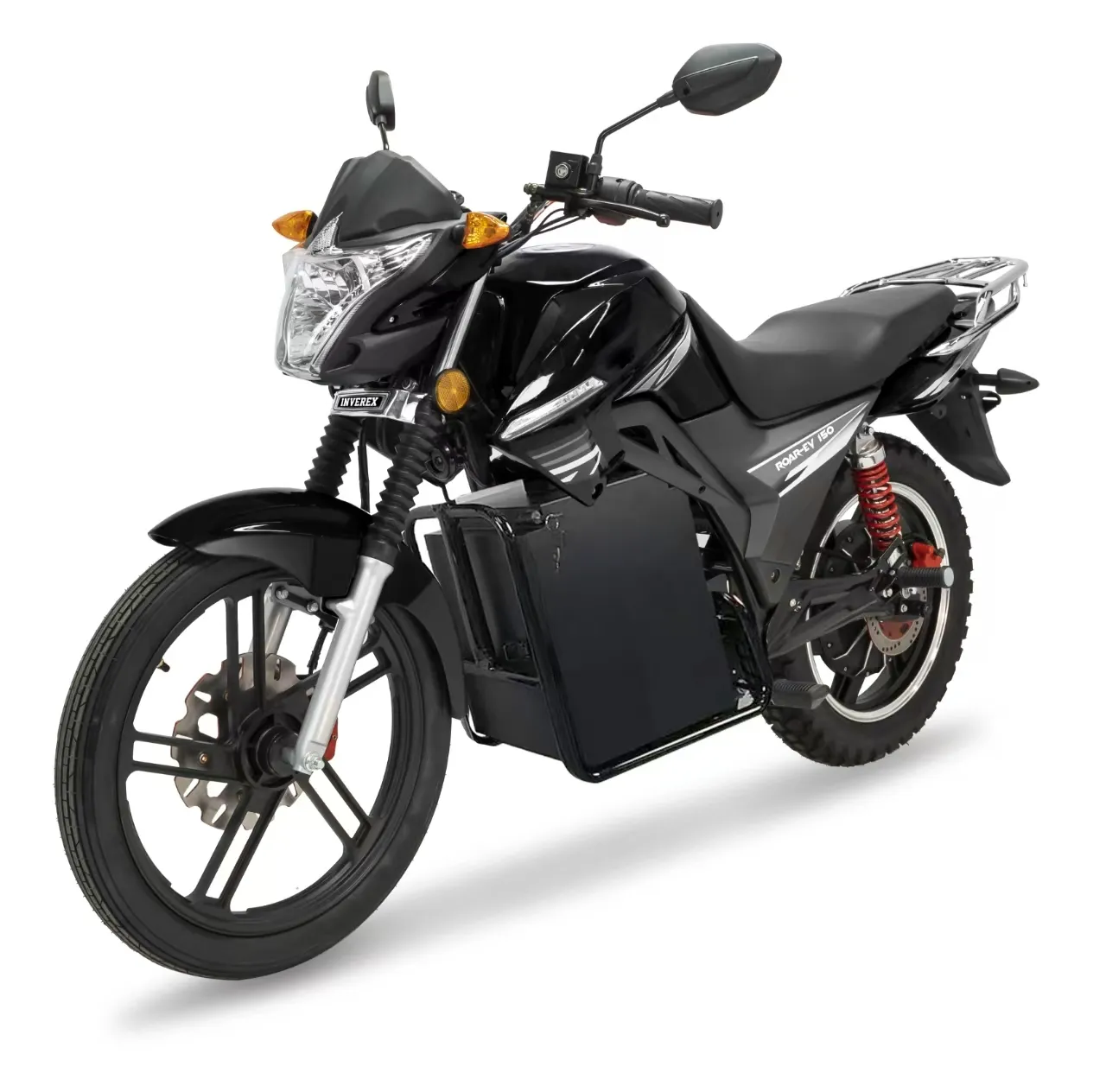
The conversation around battery swapping isn’t just for fleet operators; it’s a massive opportunity for electric motorcycle manufacturers. By designing vehicles around a standardized, swappable battery, manufacturers can unlock a host of competitive advantages. First, it allows for more innovative and lightweight vehicle design. Without the need to accommodate a large, permanently integrated battery, engineers have more freedom to optimize the frame, suspension, and ergonomics of the electric motorcycle. This can lead to better handling, higher performance, and a more appealing product for the end-user.
Second, partnering with a battery swapping solutions provider like us creates a powerful value proposition. A motorcycle brand can sell its electric motorbike at a lower upfront cost by excluding the price of the battery—often the most expensive single component of an EV. The customer then subscribes to a “Battery as a Service” (BaaS) plan. This makes the electric motorcycle more affordable and accessible to a wider market. It also eliminates the customer’s biggest long-term concern: battery degradation. With BaaS, the rider is always guaranteed a healthy, high-performance battery. This model transforms a one-time sale into a recurring revenue stream for both the manufacturer and the solutions provider, fostering long-term customer relationships.
What Key Features Define an Advanced Swappable Battery System?
As someone who has been on the front lines of lithium battery production for over a decade, I can tell you that not all batteries are created equal. An advanced swappable battery system is built on a foundation of safety, durability, and intelligence. The core of the system is the battery pack itself. At Power GoGo, we use automotive-grade battery cells that can withstand up to 6,000 cycles while retaining high capacity. This ensures a long service life and reliable performance, which is critical for commercial applications.
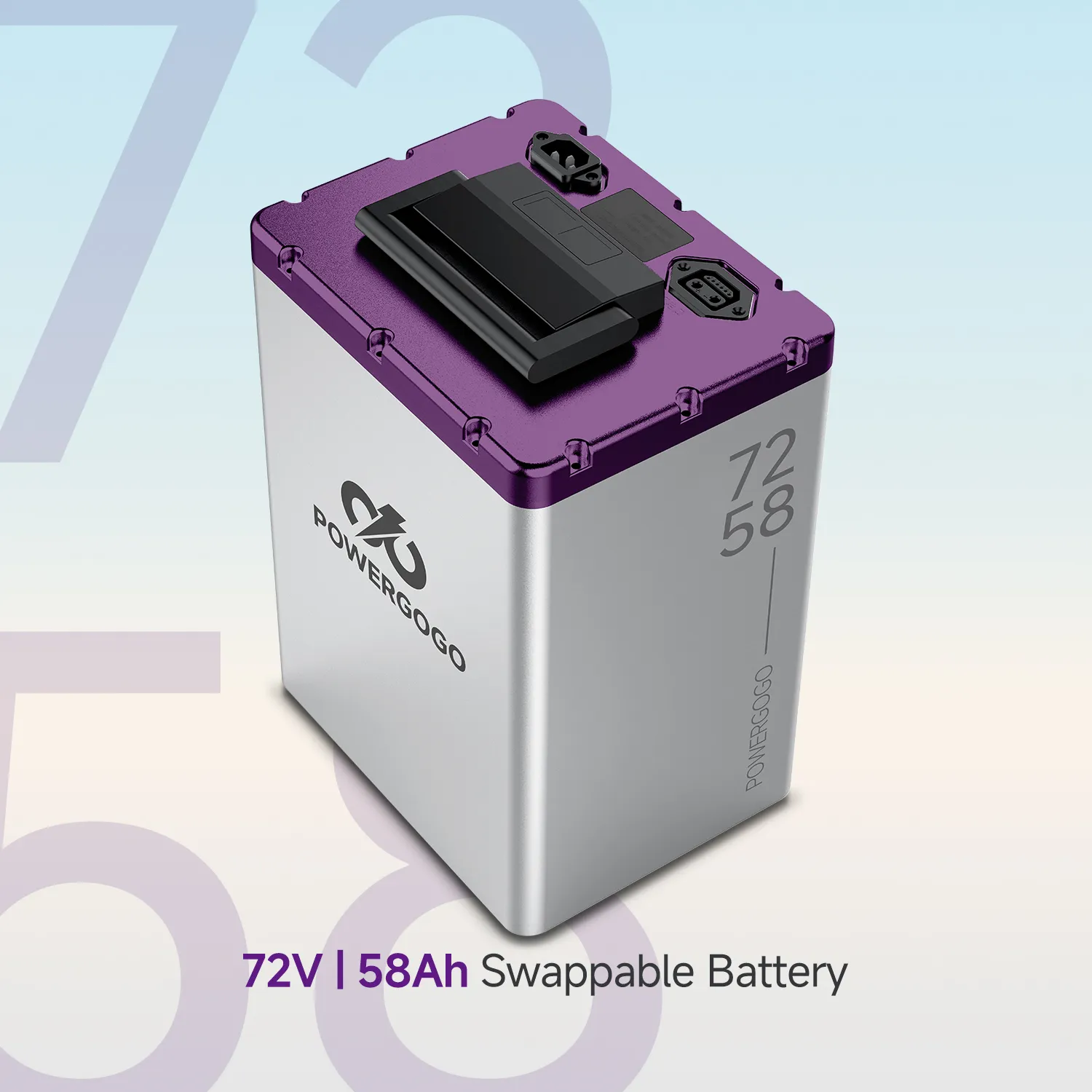
The construction of the battery is paramount. Our batteries, like the robust 72V 58Ah Swappable Battery, are housed in an IP67-rated waterproof and dustproof casing, protecting the sensitive internal components from harsh weather and road conditions. But the real intelligence lies in the Battery Management System (BMS). This onboard computer constantly monitors cell temperature, voltage, and current. It provides crucial safety features like overcharge protection, short-circuit prevention, and thermal management. A smart BMS is the single most important element in ensuring the safety and longevity of any lithium-ion battery.
Are All Battery Solutions Equal? The Critical Role of the IoT Platform.
A pile of batteries and cabinets is just hardware. The magic that transforms it into an efficient, scalable solution is the software. A robust, 24/7 cloud-based IoT platform is the central nervous system of any modern battery swapping network. It’s what gives a fleet manager like Mark the complete visibility and control he needs to run his operations smoothly. From a single dashboard, he can see the real-time location and state-of-charge of every battery in his fleet, whether it’s in a vehicle, in a cabinet, or in transit.
This data is invaluable. You can track battery health over time, proactively identifying units that need maintenance before they fail in the field. You can analyze usage patterns to optimize the placement of your battery swapping cabinets, ensuring that a fully charged battery is always available where your riders need it most. For rental or sharing models, the platform seamlessly handles user authentication and billing. Critically, for a pragmatic operator like Mark, the platform must offer secure APIs for seamless integration with his existing fleet management software. This holistic data-driven approach is what separates a basic setup from a truly intelligent and profitable swappable battery solution.
How Safe Is a Battery Swap System Compared to Conventional Charging?
Safety is a non-negotiable concern, especially when dealing with a large fleet and lithium battery technology. A well-designed battery swapping system is inherently safer than a decentralized, conventional charging setup. The primary reason is control. In a typical scenario, you might have dozens of electric scooters charging in a warehouse, often with consumer-grade chargers and varying states of electrical wiring. This creates a significant fire risk.
In contrast, our battery swapping cabinets are purpose-built, climate-controlled environments. Each charging slot is an intelligent unit that communicates directly with the battery’s BMS to deliver the optimal charging current, preventing overcharging and overheating. The cabinets themselves are equipped with multiple safety features, including temperature sensors, smoke detectors, and even fire suppression systems. All batteries undergo rigorous testing and certification (such as CE and UL) to meet international safety standards. By centralizing the charging process within these secure, monitored units, you drastically reduce the risk of thermal events and create a safer operational environment for your staff and assets.
Unlocking New Revenue: What is Battery as a Service (BaaS) and How Does It Work?
Battery as a Service (BaaS) is a revolutionary business model that decouples the battery from the electric vehicle itself. Instead of purchasing the vehicle and the battery together, the customer buys the vehicle and subscribes to a service that provides access to a network of fully charged batteries. This model is a win-win for everyone involved in the electric mobility ecosystem. For the consumer or fleet operator, it dramatically lowers the initial purchase price of the electric motorcycle, making the switch to electric more financially viable.
For the business, it eliminates the worry and expense of battery degradation and replacement. The BaaS provider takes full responsibility for the battery’s entire lifecycle, from manufacturing and deployment to maintenance and eventual recycling. This guarantees that the fleet always has access to a high-performance battery that works. For an operations director focused on the total cost of ownership (TCO), this is a dream scenario. It turns a large, unpredictable capital expenditure (battery replacement) into a stable, predictable operational expense. This model is the financial engine that makes widespread adoption of battery swapping not just possible, but profitable.
How Do I Choose the Right Battery Swapping Partner for My EV Fleet?
Choosing a partner to power your fleet is a critical decision. You’re not just buying a product; you’re investing in a long-term relationship and an essential piece of your operational infrastructure. An expert in logistics like Mark needs a supplier he can rely on for the deep technical expertise of the battery hardware and software. When evaluating potential partners, here are the key criteria to consider:
- Experience and Expertise: Look for a company with a proven track record in lithium battery production and manufacturing. Over 14 years of experience has taught us at Power GoGo how to build a battery that lasts.
- A Complete, Integrated Solution: Your partner should offer the full ecosystem: high-quality swappable batteries, a range of battery swapping cabinets, a robust IoT platform, and even the electric vehicles themselves, like our efficient EV-BL Scooter. A one-stop supplier ensures seamless integration and a single point of contact for support.
- Safety and Certification: Ensure that all components, especially the battery packs, meet stringent international safety certifications. Don’t compromise on safety.
- Scalability and Global Reach: Choose a partner who has demonstrated the ability to deploy solutions in diverse markets. Our presence in the USA, Indonesia, Spain, and Vietnam shows we understand the complexities of international logistics and support.
- Robust After-Sales Support: The relationship doesn’t end after the sale. You need a partner committed to providing ongoing technical support, maintenance, and software updates to keep your fleet running at peak performance.
Looking Ahead: The Inevitable Rise of Battery Swapping in Global Electric Mobility
The development of electric vehicles is at a tipping point. The technology is mature, the demand is growing, and the world is ready for a wave of green transportation. However, the future of electric mass adoption, particularly in the urban mobility and logistics sectors, will be defined by convenience and efficiency. The old model of waiting hours for a vehicle to charge is no longer viable for businesses that measure success in minutes.
The battery swap is more than just a convenience; it’s the enabling technology that makes electric fleets operationally and financially superior to their internal combustion counterparts. It solves the core challenges of charging time, range anxiety, and battery lifecycle management in one elegant, integrated system. As more electric motorcycle manufacturers and fleet operators recognize these profound advantages, we will see a rapid global expansion of battery swapping infrastructure. It is the key that will finally unlock the full potential of electric mobility for the masses.
Key Takeaways to Remember:
- Efficiency is King: Battery swapping eliminates vehicle downtime, converting hours of charging into seconds of swapping, which directly boosts revenue for commercial fleets.
- Safety Through Control: Centralized charging in smart, certified battery swapping cabinets is inherently safer than uncontrolled, decentralized charging environments.
- Lowers Financial Barriers: The Battery as a Service (BaaS) model reduces the upfront cost of electric motorcycles and turns battery replacement into a predictable operating expense.
- A Win for Manufacturers: Designing for swappable batteries allows for better vehicle design, lower sticker prices, and new recurring revenue streams.
- The Ecosystem Matters: A successful deployment relies on a complete, integrated solution of durable batteries, smart cabinets, and a powerful IoT software platform.
- Choose Your Partner Wisely: Look for a supplier with deep experience in battery manufacturing, a proven global track record, and a commitment to long-term support.