The electric vehicle landscape is undergoing a seismic shift, moving away from traditional ownership models toward more flexible, service-oriented approaches. At the forefront of this transformation is Battery as a Service (BaaS). This model is not just a buzzword; it is a fundamental rethinking of how we power our fleets. By separating the cost of the battery from the vehicle, businesses can drastically reduce upfront investment and operational risks. For fleet operators, this means converting a massive capital expenditure into a manageable operating expense, ensuring that your electric vehicle operations are both scalable and profitable.
This article delves into the mechanics of the BaaS model and its symbiotic relationship with battery swap stations. We will explore how this ecosystem is expanding the battery as a service market, improving energy storage capabilities, and reshaping the future of EV mobility. Whether you are managing last-mile deliveries or urban rentals, understanding BaaS is key to staying competitive in a rapidly evolving industry.
What exactly is the Battery-as-a-Service model?
The Battery-as-a-Service (BaaS) model is a strategy that decouples the ownership of the battery from the ownership of the electric vehicle. Traditionally, when you buy an EV, you are also buying the battery pack, which is often the most expensive component. In a BaaS setup, you purchase or lease the vehicle chassis, but you subscribe to the battery energy. It is similar to buying a mobile phone but signing up for a data plan, except here, the data is the physical battery itself.
This separation is crucial because it transforms the battery from a fixed asset into a service. You no longer worry about battery costs or the eventual decline in battery health. Instead, you pay a recurring fee—a subscription—for access to a fully charged battery. This model is particularly effective when paired with battery swap technology. Instead of plugging in and waiting, you exchange a depleted battery for a fully charged one in minutes.
For a commercial fleet, this means the responsibility for battery maintenance shifts from you to the service providers. You don’t need to employ technicians to diagnose voltage issues or worry about battery life cycles. The BaaS model ensures that every battery you put into your vehicle is optimized for performance, allowing you to focus on your core business of transportation rather than battery management.
How does the BaaS model significantly lower upfront costs?
One of the biggest barriers to ev adoption has always been the sticker price. EVs are generally more expensive than internal combustion engine vehicles, primarily due to high battery pack prices. By adopting a battery leasing or subscription strategy, you effectively remove the cost of the battery from the initial purchase price. This can reduce the upfront cost of an electric vehicle by 30% to 40%.
For a business scaling its operations, this capital efficiency is a game-changer. Instead of buying 100 vehicles with 100 expensive batteries, you buy 100 vehicles and sign a battery subscription contract. This moves the expense from CapEx (Capital Expenditure) to OpEx (Operational Expenditure), which is often easier for businesses to manage and tax-deduct. The battery costs are spread out over time, matching your revenue stream.
Furthermore, the subscription model protects you from technology obsolescence. Battery technology is moving fast. If you buy a battery today, it might be outdated in three years. With BaaS, you are effectively renting the energy. As battery manufacturers release newer, higher-density cells, the service providers upgrade the pool of swappable batteries. You get the benefits of the latest battery design without having to make new battery purchases.
Why is the Global Battery as a Service Market growing so fast?
The global battery as a service sector is exploding. Analysts report that the service market was valued at mere hundreds of millions a few years ago and is now projected to reach billions. The market size is expanding because it solves the two biggest headaches of the ev ecosystem: cost and range anxiety. Fleet operators in Asia and Europe are rapidly adopting this model, and we are seeing significant interest from markets in the USA and South America.
Drivers are realizing that battery ownership is a burden. The fear of battery degradation destroys the resale value of EVs. BaaS eliminates this risk. The battery as a service market is also being propelled by government incentives favoring green logistics and zero-emission zones. To operate in these zones efficiently, companies need the quick turnaround that battery swapping services provide.
Major players like Nio have popularized the concept for passenger cars, proving that battery swap stations are viable. However, the B2B sector for two-wheelers and three-wheelers, which we at Power GoGo focus on, actually commands a massive share of the battery as a service market. High-frequency usage by delivery riders makes the economics of BaaS undeniable. The sheer volume of swaps per day in urban centers drives the market share of this service type higher every year.
How does separating battery ownership from vehicle ownership benefit fleet operators?
Decoupling battery ownership from vehicle ownership simplifies asset management. When you own the battery, you are responsible for its entire lifecycle. You have to monitor it, ensure it’s not overcharged, and eventually pay for recycling or disposal. In a BaaS environment, battery lifecycle management is the problem of the supplier. Your only concern is whether the battery has power.
This separation also allows for greater flexibility in vehicle and battery ownership. You might own the scooters but lease the batteries, or lease both. This flexibility lets you adapt to seasonal demand. If your delivery business peaks in December, you can increase your battery subscription tier to access more swaps. In slower months, you scale back. You aren’t stuck with a depreciating asset sitting on a shelf.
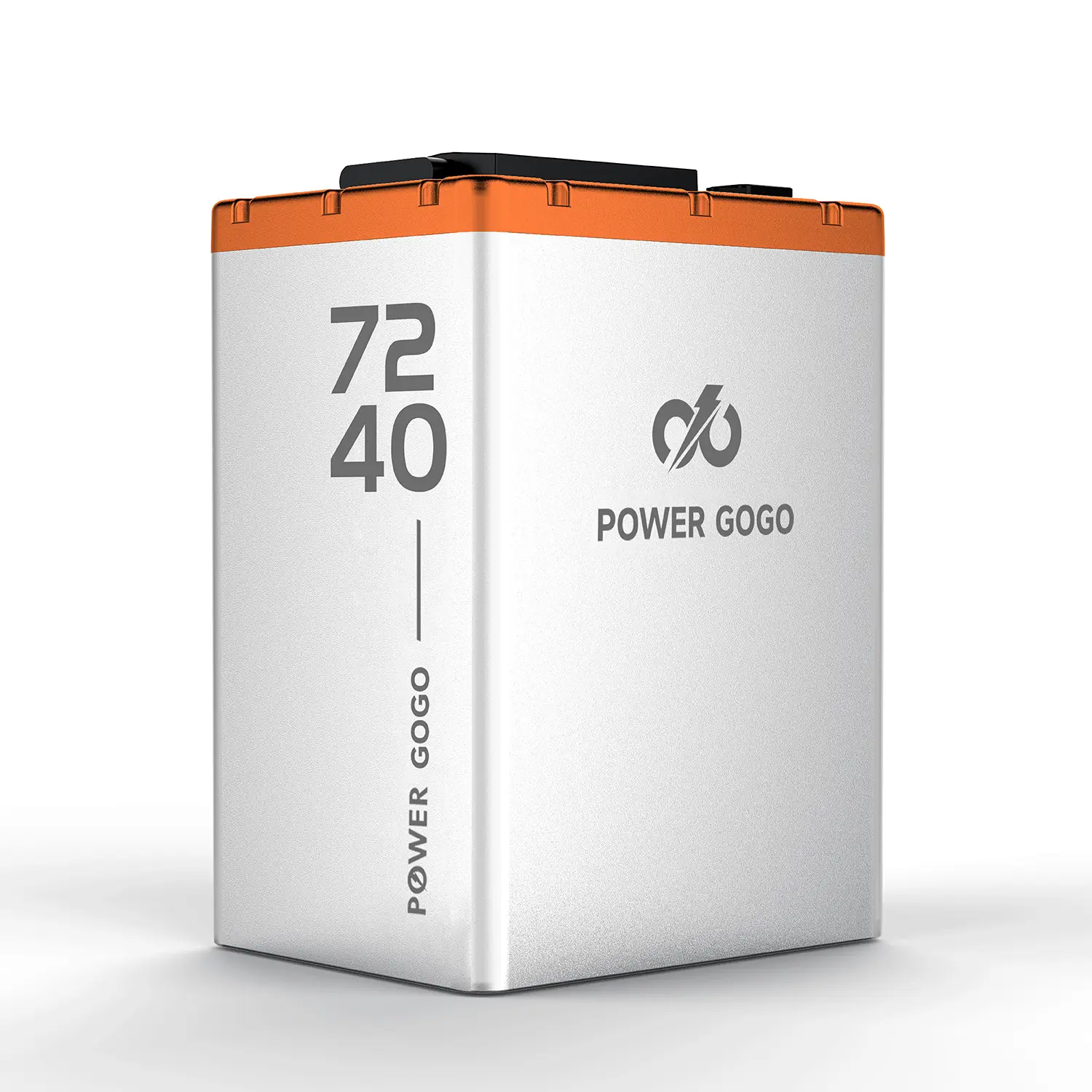
Moreover, separating battery ownership allows for standardization. Our 72V40Ah Swappable Battery can fit into various types of vehicles, from heavy-duty cargo bikes to lighter scooters. This means a mixed fleet can operate on a single battery platform. You don’t need different chargers or spare parts for every vehicle model; you just need one standard battery interface.
Why is battery swapping considered the ultimate BaaS execution?
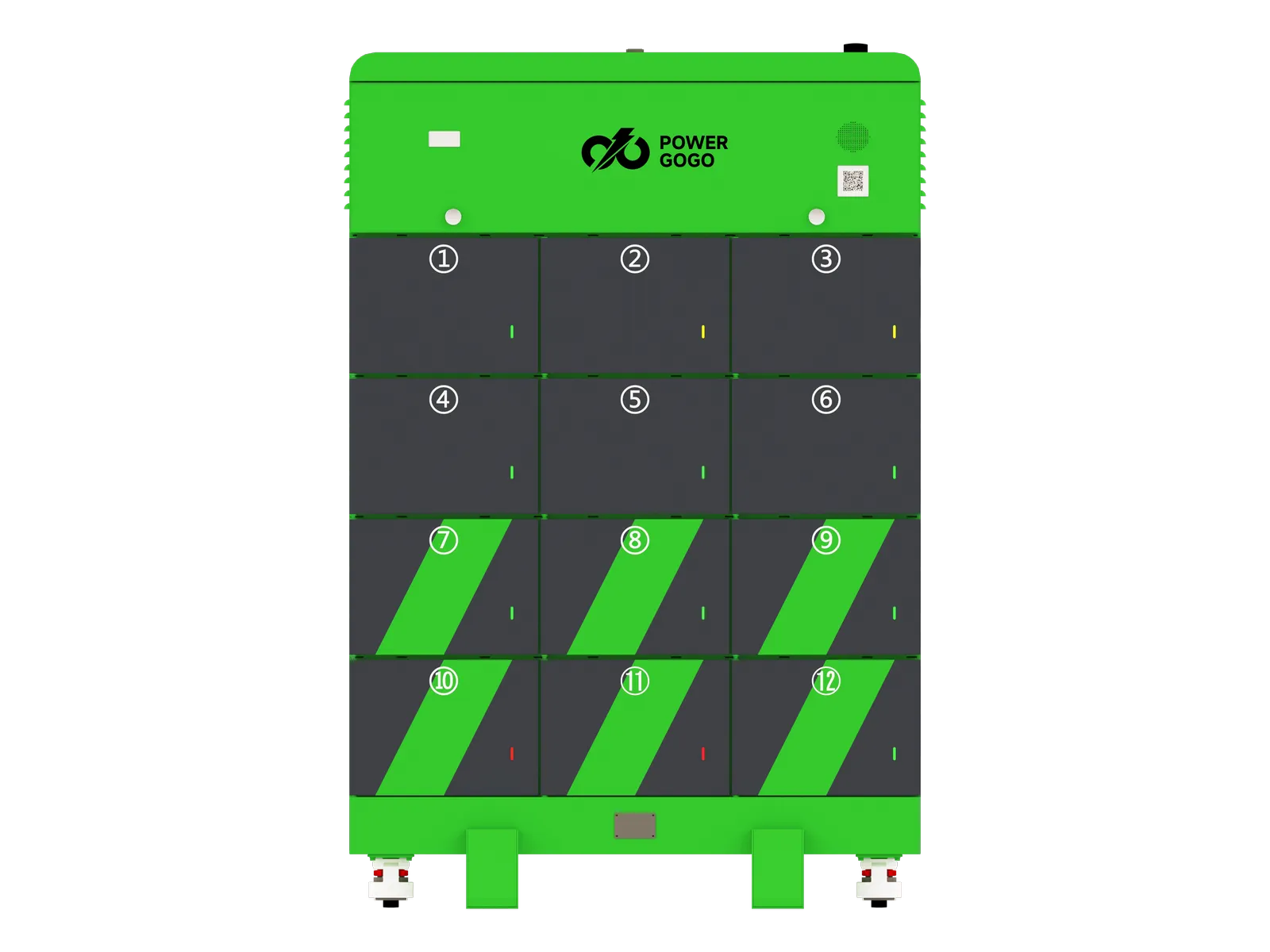
While BaaS can theoretically exist with plug-in charging (where you lease the battery but still plug it in), battery swapping is where the model truly shines. Automated battery swapping is the fastest way to "refuel" an EV. A rider pulls up to a 12-slot battery swapping cabinet, scans a code, and exchanges their depleted battery for a fully charged one in seconds.
This speed maximizes asset utilization. In a traditional charging model, a vehicle might sit idle for 4-6 hours a day attached to a plug. With swap stations, that vehicle is on the road making money. For commercial fleet operations, uptime is everything. The battery swap system ensures that the vehicle is never the bottleneck; the driver’s endurance is the only limit.
Swapping technology also ensures better battery safety. Charging is done in a controlled environment within the cabinet, not in a hot garage or under the rain. The cabinet manages the thermal load and ensures a slow, steady charge (which is better for battery health) while the driver is away, buffering a supply of fully charged packs for immediate use.
How does BaaS solve battery degradation concerns for EV ownership?
Battery degradation is the natural loss of battery capacity over time. Like a phone battery that holds less charge after two years, ev batteries wear out. For an owner, this is a terrifying prospect because replacing a battery pack can cost half as much as the vehicle. Consumer concerns about battery longevity are a major drag on ev adoption.
BaaS completely neutralizes this fear. Because the battery ownership from vehicle ownership is split, the user never has to worry about the battery dying on them permanently. If a battery in the swap network drops below a certain health percentage (State of Health), the BaaS provider removes it from circulation and replaces it with a fresh one. The driver always receives a battery that meets performance standards.
This creates a "forever young" vehicle. An electric vehicle powered by BaaS can theoretically run indefinitely, as its power source is constantly being refreshed. This dramatically extends the lifespan of the fleet, increasing the ROI for the owner. You don’t need to sell your evs after three years; you just keep swapping.
What role does Nio play as a leader in battery swapping?
It is impossible to discuss BaaS without mentioning Nio. They are a leader in battery swapping for passenger cars, having deployed thousands of stations globally. Nio proved that the concept works at scale and that premium customers value the convenience of a 3-minute swap over a 45-minute Supercharge. Their success has validated the battery as a service market in the eyes of investors and the public.
However, while Nio focuses on luxury cars, companies like Power GoGo are revolutionizing the micromobility and logistics sectors. The principles are the same, but the application is different. Our 5-slot battery swapping cabinet is designed to be deployed in convenience stores, apartment complexes, and delivery hubs.
We learn from the Nio model: standardization is key. Just as Nio standardized their battery pack across their car lineup, we standardize our 60V55Ah Iron Lithium Swappable Battery to work across multiple scooter brands. This interoperability is what will drive the next wave of adoption.
How does BaaS impact the future of EV adoption for commercial fleets?
The future of EV for business is undoubtedly tied to BaaS. As cities become more congested and regulations regarding emissions tighten, fleet operators need a solution that is both green and efficient. Battery leasing and swapping provide the only viable path to electrifying large fleets without massive infrastructure upgrades.
Installing hundreds of fast chargers requires massive grid upgrades and real estate. Installing a bank of battery swap stations is far less intrusive and can be distributed across a city. This decentralized energy storage network allows fleets to roam freely without returning to a central depot to charge. It untethers the electric vehicle from a fixed location.
We are seeing a trend where delivery companies will no longer buy batteries at all. They will simply subscribe to a battery network. This shift allows logistics companies to focus on logistics, leaving the energy tech to experts like us. The adoption of battery swapping reduces the complexity of entering the ev market, encouraging more businesses to make the switch.
How does BaaS support renewable energy and energy storage systems?
A fascinating aspect of the BaaS ecosystem is its potential for stationary storage. A battery swapping station is essentially a large power bank. It contains dozens of vehicle batteries. These stations can be integrated into the smart grid. They can charge up when renewable energy (solar, wind) is generating excess power and electricity prices are low.
Then, during peak demand times, these stations can stop charging or even feed energy back into the grid (V2G), although their primary purpose is to dispense charged batteries to riders. By intelligently managing when and how the batteries are charged, the BaaS network acts as a buffer for the energy grid. This transforms battery energy storage from a passive cost into an active grid asset.
Furthermore, when vehicle batteries degrade to the point where they are no longer suitable for mobility (e.g., 70% capacity), they can be retired from the swap network and repurposed into dedicated energy storage solutions for homes or solar farms. This second-life application is a core part of the battery as a service sustainability story.
What are the benefits of subscription models over purchasing batteries?
The subscription model offers predictability. When you purchase battery packs, you face variable costs. A battery might fail early, or you might need more range than you anticipated. With a battery subscription, your costs are fixed and predictable. You pay a monthly fee or a per-swap fee. This makes budgeting for fleet operations much simpler.
Additionally, battery leasing options often come with service level agreements (SLAs). The provider guarantees that there will always be a fully charged battery available at the swap station. If there isn’t, they pay a penalty. You don’t get that kind of guarantee when you own the plug in your wall.
Finally, the subscription model aligns the incentives of the supplier and the user. The supplier wants to build the most durable battery possible to minimize their own replacement costs. The user wants a reliable battery. This alignment drives rapid advancements in battery technology, as we are constantly incentivized to improve the battery performance of our EV-BL Scooter compatible packs.
Summary
- Cost Reduction: BaaS dramatically lowers the upfront cost of evs by removing the battery price from the vehicle purchase.
- Operational Efficiency: Battery swapping eliminates downtime associated with charging, keeping fleet vehicles on the road.
- Risk Mitigation: Separating battery ownership shifts the risk of battery degradation and technology obsolescence to the service provider.
- Scalability: The subscription model allows businesses to scale their energy needs up or down based on seasonal demand without capital lock-in.
- Sustainability: BaaS networks support renewable energy integration and enable a second-life economy for ev batteries in stationary storage.
- Simplicity: Fleet operators can focus on delivery and logistics, leaving battery maintenance and lifecycle management to experts.
The battery as a service market is not just growing; it is redefining the economics of transportation. By embracing BaaS, you are not just buying energy; you are buying the freedom to grow your business without limits.