Battery as a Service (BaaS): The Future-Proof Business Model Driving Electric Mobility
Oct-11-2025
Share:
The massive upfront cost of EV batteries, the fear of rapid battery degradation, and the operational nightmare of managing battery charging for an entire fleet are significant barriers. If this sounds familiar, this article is for you. We are going to explore a transformative solution that’s reshaping the entire EV landscape: Battery as a Service (BaaS). This isn’t just a new way to pay; it’s a completely new way to think about EV ownership and fleet management, turning your biggest liability into your greatest asset.
What Exactly is Battery as a Service (BaaS), and How Does it Work?
At its core, Battery as a Service (BaaS) is a groundbreaking business model that decouples the two most significant parts of an electric vehicle: the vehicle itself and its battery. Traditionally, when you buy an EV, you buy the battery along with it. This is a problem because the battery is the most expensive single component, and it’s also the part that degrades over time. BaaS changes this by separating battery ownership from vehicle ownership. Instead of buying the battery, you simply subscribe to a battery service.
Think of it like a subscription for your phone service rather than buying the entire network infrastructure. You purchase the electric vehicle chassis at a much lower price, and then you pay a recurring fee for access to a healthy, charged battery. This service is typically delivered through a network of battery swap stations. When your vehicle’s battery is low, you don’t plug it in and wait for hours. You simply drive to a battery swap station, and in a matter of minutes, a fully automated system will exchange depleted batteries for fully charged ones.
This BaaS model transforms the battery from a depreciating product you own into a comprehensive service you use. The fee covers the energy, the battery maintenance, the health monitoring, and the guarantee that you will always have access to a high-performance battery. It’s a fundamental shift that addresses the biggest pain points of owning an EV and unlocks a new level of efficiency, especially for commercial vehicle fleets. The BaaS concept is more than a transaction; it’s a complete energy solution.
Is BaaS Just a Fancy Term for a Battery Lease?
That’s a common question, and it’s an important distinction to make. While both a battery lease and BaaS involve paying a recurring fee for a battery, BaaS is a far more comprehensive and integrated solution. A simple battery leasing agreement might lower your initial vehicle purchase price, but it often leaves the responsibility of charging and dealing with a degrading battery on you. You’re still tied to the slow, inefficient process of plugging in, and when the battery eventually loses significant capacity, the replacement process can be complicated.
BaaS, on the other hand, is an entire ecosystem. It’s not just about giving you a battery; it’s about providing energy as a service. The key differentiator is the service delivery mechanism, which is almost always a battery swap network. This network is the physical manifestation of the service. You aren’t just leasing a single battery; you are subscribing to a network that provides instant access to a massive battery inventory of fully charged packs. The BaaS offers a guarantee of uptime that a simple lease cannot.
Furthermore, a true BaaS platform, like the one we’ve developed at Power GoGo, includes a sophisticated software layer. This platform manages the entire infrastructure, monitors the health of every single battery, and provides fleet operators with real-time data on battery usage and performance. It’s an active, managed service designed for maximum operational efficiency. A lease is a financial arrangement; BaaS is a complete, technology-driven operational solution that makes the electric vehicle a more viable and profitable tool for business.
How Does the BaaS Model Drastically Reduce the Upfront Cost of an Electric Vehicle?
The single biggest barrier to the widespread adoption of EVs has always been the price tag. The primary driver of that high price is the battery. The lithium-ion battery pack can easily account for 30-50% of the total cost of a new electric vehicle. This high upfront cost is a major hurdle for both individual consumers and for commercial fleet managers who need to purchase dozens or hundreds of vehicles at a time. This is where the BaaS model completely changes the economic equation.
By separating battery ownership from the vehicle, BaaS allows manufacturers and dealers to sell the EV without its most expensive component. This can slash the initial purchase price by a massive amount, making the upfront cost of an electric vehicle comparable to, or even cheaper than, its internal combustion engine equivalent. For a business, this has a profound impact on capital expenditure. It means you can electrify your fleet faster and with a much smaller initial investment. The battery cost is moved from a prohibitive capital expense to a predictable, manageable operating expense.
This is not just a theory; it’s a proven model. In countries like China, the BaaS market is booming precisely because it has made EVs financially accessible to a much broader audience. Companies have deployed thousands of swapping stations, creating a robust infrastructure that supports this new model of vehicle ownership. For a fleet operator, this means you can scale your operations more effectively, deploying more vehicles to serve more customers without being crippled by the enormous upfront cost of the battery technology.
What are the Core Components of a Successful BaaS Ecosystem for Commercial Mobility?
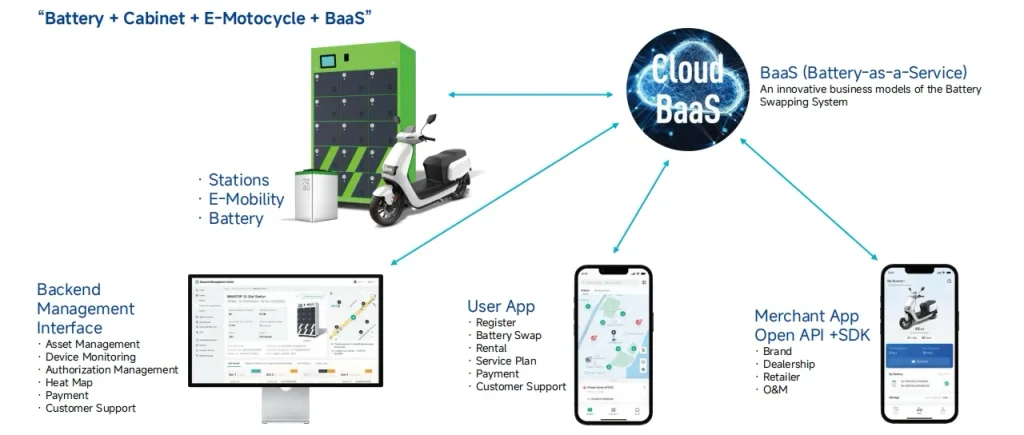
A successful BaaS ecosystem is a symphony of hardware and software working in perfect harmony. It’s a closed-loop system where every part is designed to support the others. Based on my experience engineering these solutions, a robust BaaS platform for commercial mobility rests on four pillars:
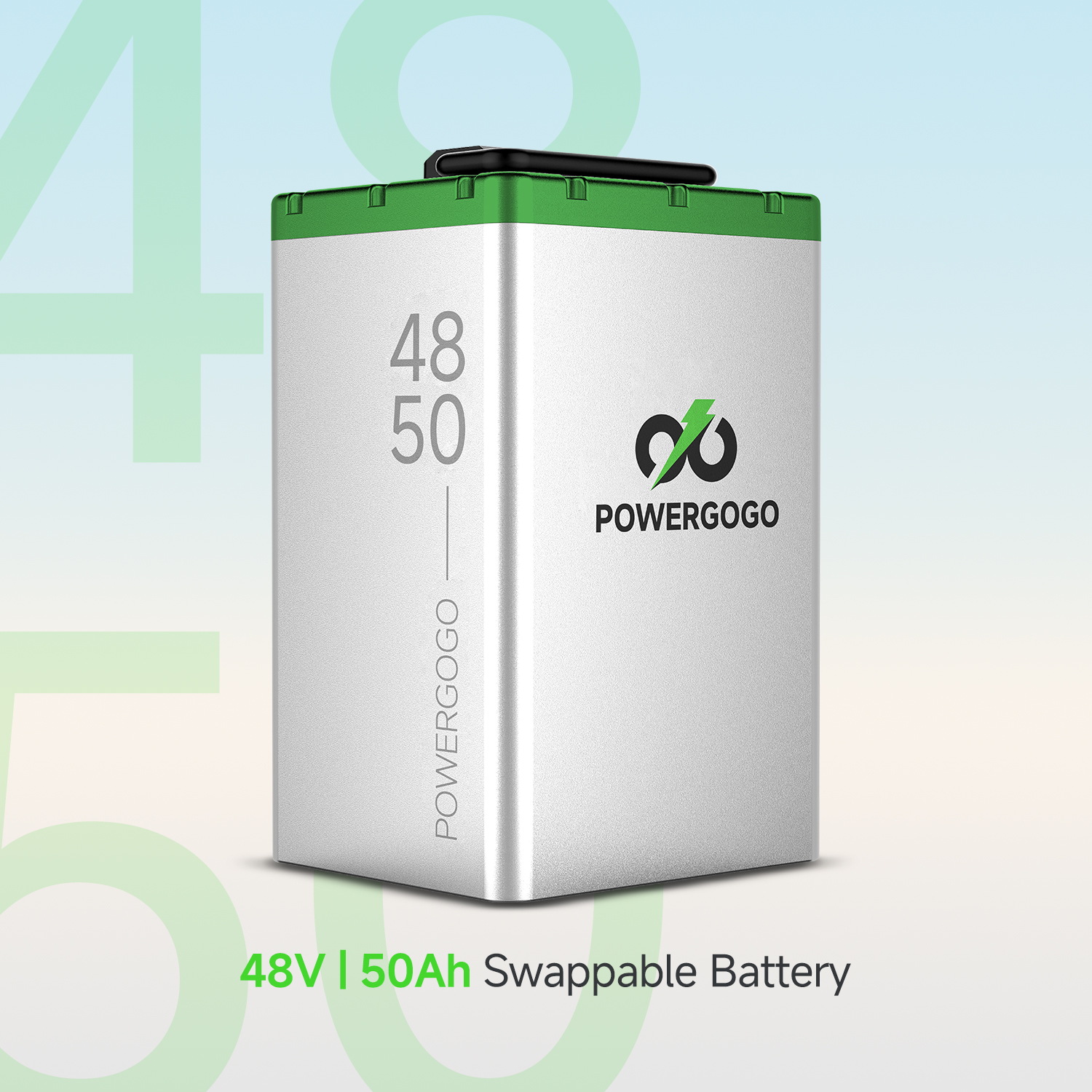
1.The Standardized Battery: The heart of the system is a high-quality, durable, and standardized battery. For a closed-loop fleet, this means every battery has the same form factor, connectors, and communication protocol. This ensures any battery can work in any vehicle or battery swap station within your network. Our 48V50Ah Iron Lithium Swappable Battery is a perfect example-it’s built with automotive-grade cells for a long life and features a smart BMS for safety and communication.
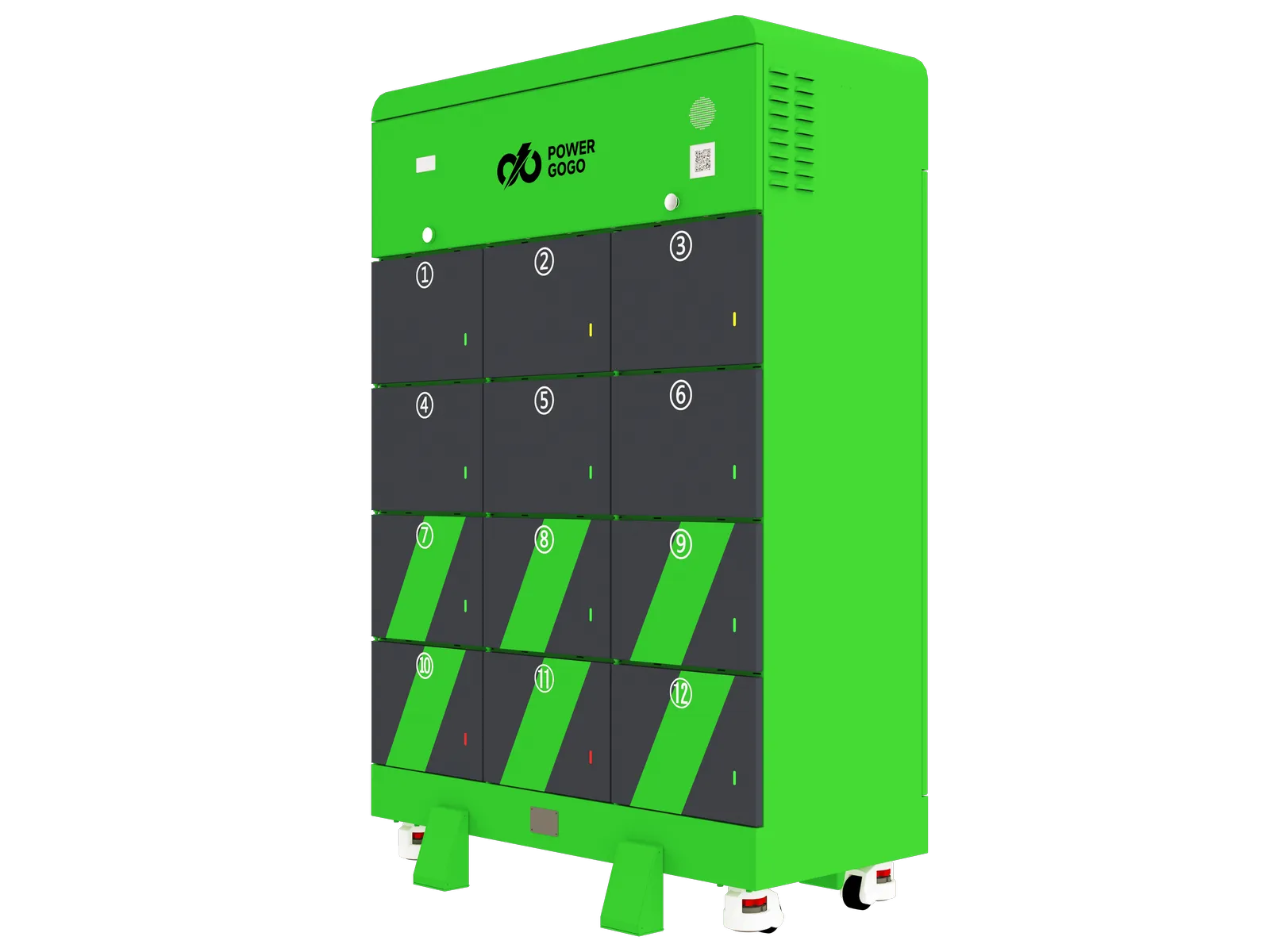
2.The Smart Swapping Station: This is the physical point of service. The battery swap station is much more than a charging cabinet. It’s a robotic hub that safely houses, charges, and manages the battery inventory. It communicates with the cloud, monitors battery health, and ensures that a fully charged, healthy battery is always available for your riders.
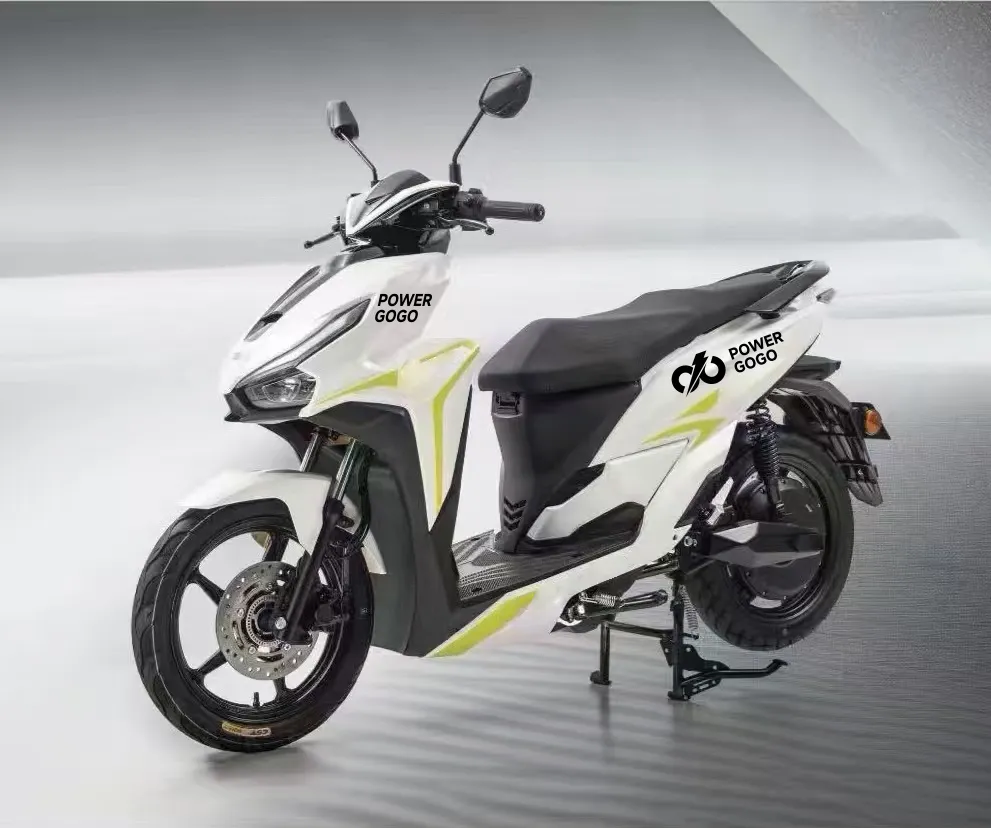
3.The Swappable EV: The electric vehicle must be designed from the ground up to accommodate a quick and easy battery swap. The battery compartment must be accessible, and the locking mechanism must be secure yet simple to operate, allowing for a swap in under three minutes. This seamless integration is crucial for user adoption and operational speed.
4.The Cloud Management Platform: This is the brain of the operation. The BaaS software platform connects everything. It allows fleet managers to monitor the entire ecosystem from a single dashboard. You can track the location and status of every battery, manage user access, analyze usage data to optimize operations, and even handle billing and subscriptions. It’s what turns a collection of hardware into an intelligent, data-driven mobility solution.
How Does a Battery Swap Infrastructure Power the BaaS Model?
The battery swapinfrastructure is the engine that makes the BaaS model run. You can’t have a true “service” without an efficient way to deliver it, and for EV energy, nothing is more efficient than swapping. The network of automated swapping stations is what provides the “instant energy” promise that is central to the BaaS value proposition. It physically enables the process of giving up a depleted battery for a fully charged one in minutes.
Imagine the alternative. If a BaaS provider relied on traditional charging infrastructure, the service would be fundamentally broken. A rider would have to find a compatible charging point, plug in, and wait for hours. This downtime is precisely the problem that BaaS is designed to solve. The battery swapping infrastructure effectively creates a distributed energy storage network. The stations act as strategic hubs, recharging batteries in a controlled, grid-friendly manner and then deploying them on demand.
This infrastructure also provides immense value through data. Every time a battery enters a battery swap station, it undergoes a health check. The station’s internal diagnostics assess the battery‘s state of charge, internal resistance, temperature, and cycle count. This data is fed back to the central platform, allowing for incredible battery management. We can identify a degrading battery long before it fails and take it out of circulation for maintenance or retirement. This proactive approach, enabled by the physical battery swap process, ensures that the fleet is always powered by a healthy and reliable battery pool, a key concern for any fleet operator.
Can BaaS Really Accelerate EV Adoption for My Fleet?
Absolutely. In fact, for commercial fleets, BaaS is arguably the most powerful catalyst to accelerate EV adoption. The reasons go far beyond the initial cost reduction. Fleet managers are pragmatists; they make decisions based on total cost of ownership (TCO) and operational efficiency. BaaS, delivered via battery swapping, optimizes both.
Here’s a breakdown of how BaaS directly drives EV adoption for businesses:
Barrier to EV Adoption
How BaaS Solves It
High Upfront Cost
Sells the EV without the battery, slashing the initial investment.
Range Anxiety
A network of swapping stations provides instant energy, eliminating rider fears.
Long Charging Times
A battery swap takes <3 minutes, maximizing vehicle uptime and revenue.
Battery Degradation Fear
The BaaS provider owns and manages the battery, guaranteeing performance.
Complex Charging Logistics
Eliminates the need for costly and hazardous in-house charging infrastructure.
Uncertain Resale Value
The vehicle’s value is preserved as it’s not tied to a depreciating battery.
By systematically dismantling these barriers, BaaS de-risks the transition to electric. It makes the decision to switch not just environmentally responsible, but financially and operationally superior. From my experience helping businesses make this transition, the moment they see how a 12 Slolts Battery Swapping Cabinet can keep their vehicles on the road nearly 24/7, the case for BaaS becomes undeniable. It’s the key that unlocks the true potential of a commercial electric vehicle fleet.
Beyond Cost, What are the Operational Benefits of BaaS Business Models?
While the financial benefits of BaaS are compelling, the operational advantages are what truly make it a game-changer for fleet management. The primary benefit is the radical increase in asset utilization. An electric vehicle that is charging is an asset that is not generating revenue. With traditional EV charging, a vehicle can be out of commission for 4-8 hours a day. With a BaaS and battery swap model, that downtime is reduced to a few minutes per “refueling.” This means you can serve the same number of customers or complete the same number of deliveries with a significantly smaller fleet of EVs.
Secondly, BaaS simplifies your entire energy management process. You no longer need to dedicate valuable warehouse space to a messy and potentially hazardous charging area. You don’t need to pay staff to manage the plugging and unplugging of vehicles. The entire process is automated and handled by the BaaSinfrastructure. This reduces labor costs, saves space, and significantly improves workplace safety. The BaaS provider becomes your energy partner, managing the complexity of battery logistics so you can focus on your core business.
Finally, the data generated by the BaaS platform is an operational goldmine. You gain unprecedented visibility into your fleet’s energy consumption. You can track battery performance across different routes or riders, optimize the placement of swapping stations based on demand, and use predictive analytics to manage your battery inventory. This data-driven approach allows for continuous optimization, squeezing more efficiency and profit out of your entire mobility operation.
How Does BaaS Address Concerns About Battery Longevity and Recycling?
Concerns about battery life and what happens at the end of that life are major considerations in the shift to sustainable transportation. The BaaS model offers elegant solutions to both of these challenges. Because the BaaS provider retains ownership of the battery, it is in their best financial interest to maximize the longevity and performance of that battery asset. This creates a powerful incentive for proper battery care.
In a BaaS ecosystem, every battery is charged under ideal, climate-controlled conditions inside the swap station. This avoids the damage caused by improper or overly aggressive charging, which significantly extends the battery‘s lifespan. Continuous monitoring allows the provider to track the health of each battery pack and manage its usage to ensure it degrades as slowly as possible. This careful stewardship means the battery will have a much longer and more productive first life in a vehicle than a consumer-owned battery.
When a battery eventually reaches a point where it is no longer suitable for the high demands of powering a vehicle, it is not discarded. The BaaS provider can seamlessly repurpose it for a second life in less demanding applications, such as stationary energy storage systems. These energy storage units can be used to support the EV charginginfrastructure itself or to provide grid stabilization services. Finally, at the absolute end of its useful life, the provider is responsible for battery recycling. This centralized ownership ensures that valuable materials are recovered and fed back into the battery production cycle, creating a truly circular economy and making the entire electric mobilityecosystem more sustainable.
What are the Challenges to Implementing BaaS, and How are They Being Solved?
No revolutionary model is without its challenges. For BaaS, the primary hurdle has been battery standardization. For BaaS to work on a public, open-network scale (like gas stations), different vehicle brands would need to use the same physical battery. While the automotive industry is slowly moving in this direction, it remains a complex issue for passenger cars.
However, this is far less of a problem for commercial and fleet applications. Businesses like Mark’s are creating their own closed-loop ecosystems. By sourcing the vehicles, batteries, and swapping stations from a single integrated supplier like Power GoGo, they create their own standard. Our EV-WF Scooter, for example, is designed to work perfectly with our battery and cabinet systems. In this model, fleet-wide compatibility is guaranteed, and the challenge of industry-wide standardization becomes irrelevant to the immediate business case.
The other major challenge is the capital investment required to build out the initial battery swapping infrastructure. Building and deploying swapping stations and stocking them with a float of batteries requires funding. This is being addressed by a variety of innovative financing and partnership models. Furthermore, as the operational efficiencies and profitability of the BaaS model become more widely understood, attracting investment is becoming easier. The success of battery swapping companies in Asia has provided a clear blueprint, proving that the BaaS model is not just viable but highly lucrative, encouraging its adoption and build-out on a global electric vehicle scale.
What Does the Future Look Like for BaaS and the Global Electric Vehicle Market?
The future of BaaS is incredibly bright, and I believe it will become the dominant model for powering commercial EVs and a significant portion of the consumer market. The BaaS is gaining global traction because it solves the most fundamental problems of the EV revolution: cost, convenience, and lifecycle management. We will see the BaaS ecosystem become even more intelligent and integrated.
Imagine swapping stations that are fully integrated with the electrical grid and renewable energy sources. They will draw power from solar or wind when it’s abundant and cheap, acting as distributed energy storage hubs that can even sell power back to the grid during peak demand. This transforms the charging infrastructure from a simple energy consumer into an active participant in the transition to clean energy.
Furthermore, we will see BaaS expand across different vehicle segments, from electric two-wheelers and delivery vans to ride-sharing vehicles and even commercial trucks. As battery technology improves and designs become more modular, the vision of a universal battery swap becomes more attainable. The BaaS model in India, for example, is already showing massive potential for two- and three-wheelers. This is not just a niche solution; it’s a foundational technology that will accelerate EV adoption while creating new business opportunities across the entire mobility and energy sectors. It’s a key part of our mission at Power-gogo to build this future.
Key Takeaways
BaaS Solves the Cost Problem: By separating the battery from the vehicle, BaaS dramatically lowers the upfront cost of an EV, making fleet electrification financially feasible.
It’s a Service, Not a Lease:BaaS is a complete ecosystem that includes the battery, the battery swap service, maintenance, and a smart management platform, offering far more than a simple lease.
Uptime is the Ultimate Goal: Powered by battery swap technology, BaaS minimizes vehicle downtime to minutes, maximizing the productivity and profitability of your fleet.
Sustainability is Built-In: The BaaS model incentivizes better battery care, enables second-life applications in energy storage, and ensures responsible battery recycling.
The Future is Integrated:BaaS is the future of efficient fleet management, paving the way for a smarter, more scalable, and more sustainable electric mobility landscape.
We use cookies to ensure that we give you the best experience on our website. If you continue to use this site we will assume that you are happy with it.